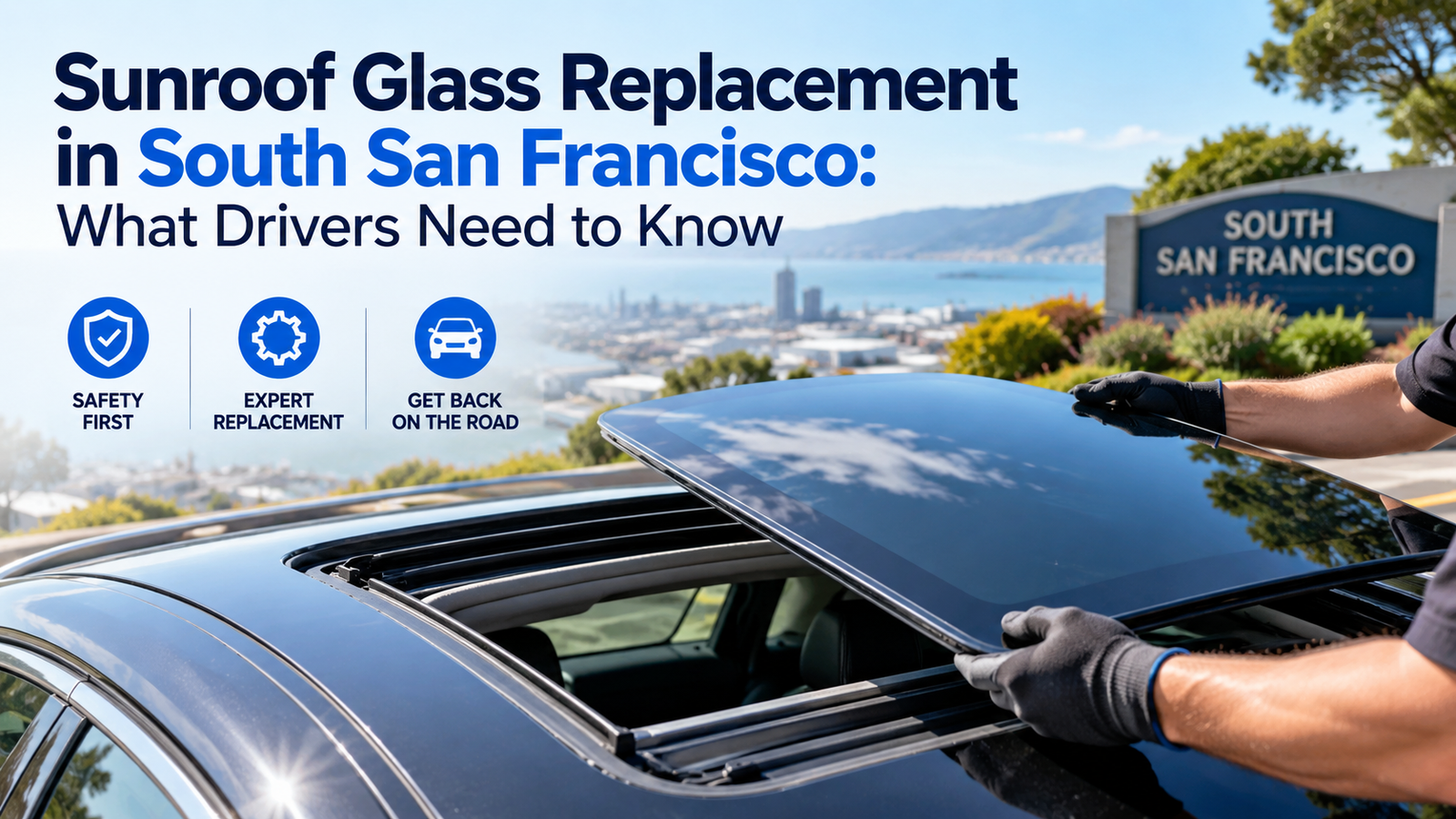
A cracked or shattered sunroof panel is one of the more unexpected vehicle glass problems drivers in South San Francisco encounter and one of the more urgent ones. Unlike a windshield chip that can sometimes wait a few days for repair, a compromised sunroof means exposure to the Bay Area’s marine layer fog, evening moisture, and the occasional rain event that sweeps through the San Francisco Peninsula without warning. South San Francisco’s position between San Bruno Mountain to the north and the industrial waterfront to the east places it squarely in the path of microclimates that make a functioning sunroof more than a luxury it is part of the vehicle’s weatherproofing system. This guide explains what Sunroof Glass Replacement South San Francisco actually involves, the different types of sunroof systems found in vehicles common to the South San Francisco market, and what drivers should know before scheduling service.
How Sunroof Systems Work and Why Glass Replacement Is More Complex Than It Looks
Modern vehicle sunroofs are integrated systems, not simply a piece of glass set in a hole in the roof. The glass panel sits within a precision-engineered frame assembly that includes the drainage channels, the seal perimeter, the tilt and slide mechanism (for power sunroofs), and in many cases the wind deflector at the leading edge. All of these components work together to create a watertight, wind-resistant opening that can be reliably operated through thousands of open-and-close cycles over the vehicle’s life.
The glass itself in most modern sunroof systems is tempered safety glass the same heat-strengthened glass used in side and rear windows. Like other tempered glass, sunroof glass shatters into small rounded fragments rather than large dangerous shards when it breaks. This safety property is important for occupant protection but it also means that sunroof glass, once broken, is entirely gone there is no repair option for shattered or severely cracked sunroof glass. Every case of significant sunroof glass damage requires replacement of the panel.
Panoramic sunroofs, which are increasingly common in the newer vehicle models prevalent in the Bay Area’s technology-forward vehicle market, use one or more large glass panels that may span a significant portion of the vehicle’s roof. These larger panels can use laminated glass similar in construction to windshields, with a polyvinyl butyral interlayer between two glass layers because their size makes laminated glass’s crack-containment properties more valuable. The distinction between tempered and laminated sunroof glass affects both the breakage behavior and the replacement sourcing process.
Tilt-only sunroofs, which open at the rear edge to vent air, are the simplest sunroof configuration. Power sliding sunroofs move rearward on a track system, typically guided by motor-driven cables or arms. Retractable full-panel sunroofs slide between the headliner and the roof structure. Each mechanism type has specific installation requirements for the glass panel that must be correctly followed during replacement to ensure proper operation, drainage, and sealing after the new glass is installed.
Why South San Francisco Conditions Matter for Sunroof Integrity
The climate along the San Francisco Peninsula creates specific demands on sunroof seal integrity that are worth understanding for South San Francisco vehicle owners. The marine layer that characterizes the coastal fog pattern deposits moisture on vehicle surfaces throughout the year not just during rain events, but through the nightly and early-morning condensation that accumulates even during summer months. A sunroof seal that has degraded, or a replacement that was not properly seated, allows this moisture to infiltrate the headliner, interior trim, and the drainage channel system beneath the sunroof frame.
Water infiltration through a compromised sunroof seal in South San Francisco vehicles typically first manifests as water stains on the headliner, musty odors from trapped moisture in the headliner foam, or water accumulation in the footwell of the front passengers (because the sunroof drainage system channels water through tubes that exit near the base of the A-pillars). These symptoms indicate a sealing problem that, if not addressed, leads to headliner replacement, electrical damage to sunroof control modules, and potential mold growth in the vehicle interior all outcomes far more expensive than prompt, proper sunroof glass replacement.
South San Francisco’s salt air environment from the bay proximity is an additional consideration for the rubber seals that border the sunroof glass. Salt air accelerates the degradation of rubber compounds, and a sunroof seal that has been exposed to South San Francisco’s coastal air for years may be more vulnerable to cracking and hardening than an equivalent seal in an inland location. When sunroof glass is replaced, the technician should assess the seal condition and recommend replacement of any seal that shows signs of hardening, cracking, or poor contact with the new glass panel.
What Sunroof Glass Replacement Involves Step by Step
Professional sunroof glass replacement begins with complete diagnosis of the damage and assessment of the surrounding system. Before ordering replacement glass, an experienced technician determines whether the damage is limited to the glass itself or whether the frame, tracks, or seals have also been affected. Impact damage from road debris or parking incidents can sometimes deform the surrounding frame, which must be corrected before new glass can be installed and properly sealed.
Removal of the damaged glass requires careful disassembly of the sunroof frame interior trim, the wind deflector, and the mechanical components that attach to the glass panel. For power sunroofs, the glass panel is typically attached to the operating mechanism through clips or brackets that must be detached before the glass can be removed. In panoramic sunroof systems with multiple panels, the specific damaged panel must be identified and removed without disturbing adjacent panels or the roof structure.
After damaged glass removal, the mounting surface and seal channel are cleaned of any broken glass fragments, old seal material, and debris. The drainage channels in the sunroof frame are inspected and cleared blocked drainage channels are one of the most common causes of interior water damage in vehicles with sunroofs, and replacement service is the ideal opportunity to clear them. For power sunroofs, the operating mechanism is tested to confirm that it moves smoothly through its full range before the new glass is installed.
New glass installation involves positioning the replacement panel precisely within the frame, ensuring even contact with the seal around the entire perimeter, and securing it to the operating mechanism at the correct attachment points. The new glass is then tested through multiple open-and-close cycles to confirm smooth operation without binding, rubbing, or misalignment. A water test using a controlled water flow around the closed sunroof perimeter confirms that the seal is fully effective before the service is complete.
OEM vs. Aftermarket Sunroof Glass for Bay Area Vehicles
OEM (Original Equipment Manufacturer) sunroof glass is produced to the exact specifications of the original panel matching the glass thickness, curvature, tint characteristics, acoustic properties, and any special coatings (UV-filtering coatings are increasingly common in modern sunroof glass) precisely. For panoramic sunroof systems and vehicles with integrated ADAS sensors near the roof glass, OEM glass is generally the appropriate choice because the optical characteristics must match the system’s design parameters.
Aftermarket sunroof glass from reputable manufacturers can provide a cost-effective alternative for standard sunroof configurations where dimensional fit and basic optical properties are the primary requirements. Quality varies among aftermarket suppliers, and a technician who regularly sources aftermarket glass for the Bay Area market can advise on which products have proven reliable for specific vehicle makes and models.
Common Questions About Sunroof Glass Replacement in South San Francisco
How long does sunroof glass replacement take? Standard sunroof glass replacement typically takes two to three hours for most vehicle configurations. Complex panoramic systems with multiple panels or systems requiring recalibration of motor positions may take longer. Mobile service at a South San Francisco location can be arranged for most standard sunroof replacement scopes.
Does California insurance cover sunroof glass replacement? Yes. Sunroof glass damage is covered under comprehensive auto insurance. California does not mandate zero-deductible glass coverage, so the comprehensive deductible applies. Drivers with comprehensive coverage should contact their insurer before scheduling to confirm coverage and discuss whether the out-of-pocket deductible applies to their specific claim.
Can a sunroof leak be fixed without replacing the glass? If the leak is caused by a damaged seal around otherwise-intact glass, the seal can sometimes be replaced without replacing the glass panel. If the glass is cracked, chipped, or shattered, replacement is required. If the drainage channels are blocked rather than the seal failing, channel cleaning resolves the leak without glass or seal replacement.